

Login
MyFFonseca
If you do not have an account MyFFonseca, please register and get access to exclusive content to registered users!
Create registry
Login
MyFFonseca
If you do not have an account MyFFonseca, please register and get access to exclusive content to registered users!
Create registry


Analog positioning sensors MPA - SICK
MPA position sensors continuously detect the piston position of pneumatic actuators using a direct, non-contact method. The sensors in the MPA product family are ideal for large piston diameters and long strokes. The sensor settings can be adjusted during installation and during operation later on, using a teach field or – depending on the variant – using IO-Link.
The MPA analog positioning sensors, from SICK, continuously supply data via analog outputs or IO-Link, enabling flexible machine concepts and making it possible to solve tasks in areas such as quality monitoring and process control in conjunction with pneumatic cylinders and drives. This continuous transfer of position data upgrades the functionality of the pneumatic cylinders by making them more intelligent – and, as a result, more versatile.
The MPA analog positioning sensors, from SICK, continuously supply data via analog outputs or IO-Link, enabling flexible machine concepts and making it possible to solve tasks in areas such as quality monitoring and process control in conjunction with pneumatic cylinders and drives. This continuous transfer of position data upgrades the functionality of the pneumatic cylinders by making them more intelligent – and, as a result, more versatile.

Analog positioning sensors MPS - SICK
MPS position sensors continuously detect the piston position of pneumatic actuators using a direct, non-contact method. They can be mounted in C-slots and T-slots without the need for additional accessories. The sensor settings can be adjusted during installation and during operation later on, using a teach field or IO-Link.
The MPS analog positioning sensors, from SICK, continuously supply data via analog outputs or IO-Link, enabling flexible machine concepts and making it possible to solve tasks in areas such as quality monitoring and process control in conjunction with pneumatic cylinders and drives. This continuous transfer of position data upgrades the functionality of the pneumatic cylinders by making them more intelligent – and, as a result, more versatile.
The MPS analog positioning sensors, from SICK, continuously supply data via analog outputs or IO-Link, enabling flexible machine concepts and making it possible to solve tasks in areas such as quality monitoring and process control in conjunction with pneumatic cylinders and drives. This continuous transfer of position data upgrades the functionality of the pneumatic cylinders by making them more intelligent – and, as a result, more versatile.

Bulkscan® LMS511 sensor - SICK
Non-contact and maintenance-free measurement of volume flow.
The Bulkscan® LMS511 uses time-of-flight laser technology to provide non-contact volume flow measurements on conveyor belts. No matter what kind of bulk materials are involved or how bad weather conditions are, the multi-echo technology allows the Bulkscan® LMS511 sensor, from SICK, to generate a reliable volume flow signal using the laser's time of flight and the belt speed.
The Bulkscan® LMS511 uses time-of-flight laser technology to provide non-contact volume flow measurements on conveyor belts. No matter what kind of bulk materials are involved or how bad weather conditions are, the multi-echo technology allows the Bulkscan® LMS511 sensor, from SICK, to generate a reliable volume flow signal using the laser's time of flight and the belt speed.
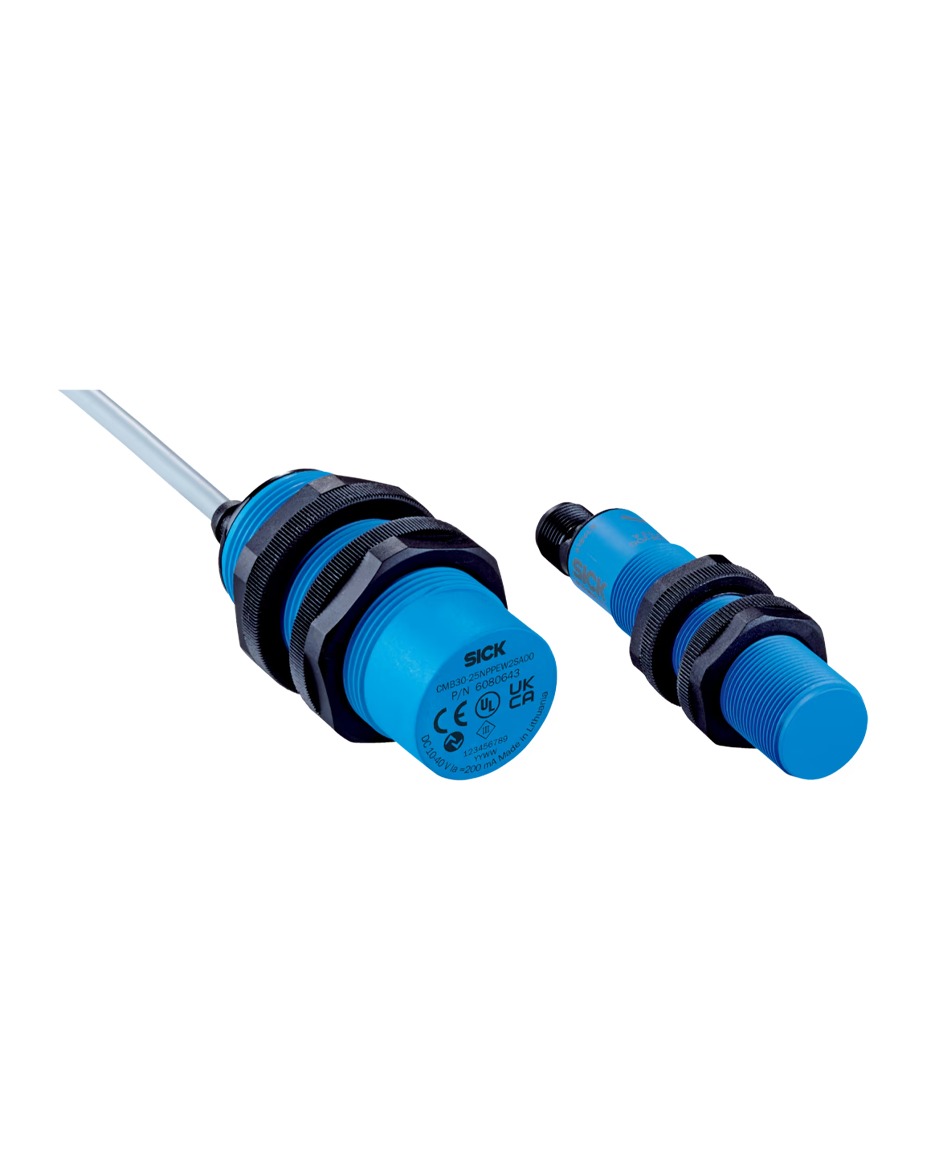
Capacitive proximity sensor CMB – SICK
The CMB capacitive proximity sensors from SICK detect objects and levels regardless of color, reflectance, and gloss of the surfaces. In the process, they detect powdery, granulated, liquid, and solid materials – even through non-metallic walls made of plastic or glass, for example. The proven and rugged sensors are cost-efficient and feature extremely high electromagnetic compatibility (EMC), which prevents switching errors and reduces downtime. Thanks to the IO-Link interface, different parameterizations can be performed, and detailed data can be read out. This makes the CMB devices suitable for more complex applications and enables predictive maintenance.

Capacitive proximity sensors CM – SICK
Capacitive proximity sensors from SICK can detect all powdery, granulated, liquid, and solid materials – even through plastic or glass walls.
Sick’s capacitive proximity sensors feature extremely high electromagnetic compatibility (EMC), which prevents false switches and sensor failure.
Sick’s capacitive proximity sensors feature extremely high electromagnetic compatibility (EMC), which prevents false switches and sensor failure.

Capacitive proximity sensors CQF - SICK
The SICK CQF capacitive level sensor detects liquids through container walls and through direct contact with the liquids. The measurement principle compensates for foam, moisture and deposits. This ensures that the CQF only detects the liquid in the container - nothing else.
For standard applications, the sensor is ready for operation without additional settings. For challenging applications, it can be taught-in quickly and easily using the cable. The mounting set offers different installation options, making the CQF is well-suited for countless customer applications.
For standard applications, the sensor is ready for operation without additional settings. For challenging applications, it can be taught-in quickly and easily using the cable. The mounting set offers different installation options, making the CQF is well-suited for countless customer applications.
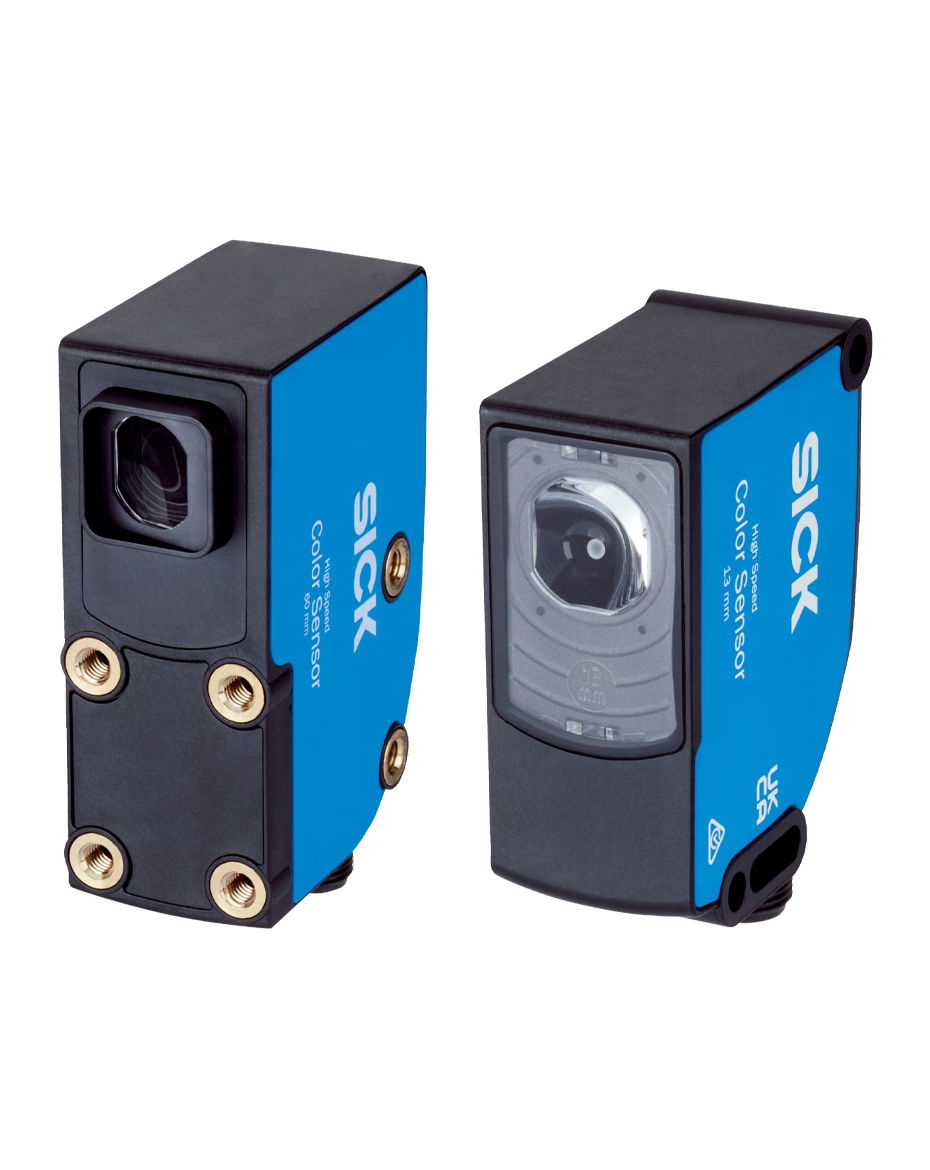
Color sensor CSS – SICK
The CSS color sensors from SICK combine high color resolution and high-speed color detection in a versatile product range designed for demanding industrial applications.
Both product families support IO-Link, enabling transfer and external storage of up to 24 colors per identification task (job), and can be quickly commissioned using the application-specific setup assistant in SOPAS software.
Both product families support IO-Link, enabling transfer and external storage of up to 24 colors per identification task (job), and can be quickly commissioned using the application-specific setup assistant in SOPAS software.

Contrast sensor Glare - SICK
The Contrast Glare sensor is specially designed to recognize and differentiate objects on the basis of their gloss in order to control production processes.
The Glare sensor from SICK analyzes the spatial distribution of reflected light using Delta-S technology, which allows the sensor to determine the gloss level of flat object surfaces and to differentiate between objects of differing gloss levels. The measurement result is transmitted to the process controls either via two digital switching outputs or IO-Link.Several operating modes are available, making the Glare sensor perfectly suited to a range of different applications.
The Glare sensor from SICK analyzes the spatial distribution of reflected light using Delta-S technology, which allows the sensor to determine the gloss level of flat object surfaces and to differentiate between objects of differing gloss levels. The measurement result is transmitted to the process controls either via two digital switching outputs or IO-Link.Several operating modes are available, making the Glare sensor perfectly suited to a range of different applications.

Contrast sensors KTS and KTX – SICK
Where most of the contrast sensors reach their limits, the KTS and KTX offer more applications, more areas of use, more flexibility.
They incorporate more than just the reliability and availability of contrast sensors from the market and technology leader: TwinEye-Technology®, multifunctional display, integrated job memory and the combination of contrast and color sensor technology.
They incorporate more than just the reliability and availability of contrast sensors from the market and technology leader: TwinEye-Technology®, multifunctional display, integrated job memory and the combination of contrast and color sensor technology.

Cylindrical photocells GR18 - SICK
The GR18 product family: reliable and extremely versatile.
The GR18 photoelectric sensor family in a cylindrical M18-housing offers an optimal price/performance ratio. It can be used universally in many applications thanks to its standard M18 housing size. PinPoint LED s, plastic and metal housing versions as well as status indicators that are easily visible from all angles complete the sensor’s features.
One product family for all applications GR18 cylindrical photoelectric sensors in the cylindrical M18 housing are outstanding in both the short length version (GR18S) and the standard length version (GR18), and offer an optimal price-performance ratio.
The GR18 photoelectric sensor family in a cylindrical M18-housing offers an optimal price/performance ratio. It can be used universally in many applications thanks to its standard M18 housing size. PinPoint LED s, plastic and metal housing versions as well as status indicators that are easily visible from all angles complete the sensor’s features.
One product family for all applications GR18 cylindrical photoelectric sensors in the cylindrical M18 housing are outstanding in both the short length version (GR18S) and the standard length version (GR18), and offer an optimal price-performance ratio.

Cylindrical photoelectric sensors – Sick
Photoelectric switches in cylindrical from Sick housing allow universal and extremely simple installation without restrictions of sensor performance.
The advantages: compatible 1-hole installation M12 or M18 for different product series and a variety of applications.
The advantages: compatible 1-hole installation M12 or M18 for different product series and a variety of applications.

Electronic pressure sensor PAC50 - SICK
Turns pressure into colors.
For improved monitoring of air pressure, the PAC50 electronic pressure switch from SICK offers more at a glance – the large bi-color display allows you to identify from a distance if the pressure falls within the target range. Three large function keys and intuitive menu navigation make operating the PAC50 easy.
For improved monitoring of air pressure, the PAC50 electronic pressure switch from SICK offers more at a glance – the large bi-color display allows you to identify from a distance if the pressure falls within the target range. Three large function keys and intuitive menu navigation make operating the PAC50 easy.

Fiber optic contrast sensors KTL180 – SICK
The KTL180 reliably detects contrast differences even at high machine speeds. Thanks to its 31.2 kHz switching frequency, a high grayscale resolution and manual switching threshold adjustment, the KTL180 makes for safe object detection.
The response time of 16 µs ensures stable and accurate detection of contrast differences, for example with print marks, even for high-gloss materials. The sensor can be quickly adjusted to the respective application with the 7-segment display and easy menu guidance. Various teach-in processes as well as an integrated job save increase the flexibility during commissioning in a large range of applications - with very high process stability.
The response time of 16 µs ensures stable and accurate detection of contrast differences, for example with print marks, even for high-gloss materials. The sensor can be quickly adjusted to the respective application with the 7-segment display and easy menu guidance. Various teach-in processes as well as an integrated job save increase the flexibility during commissioning in a large range of applications - with very high process stability.
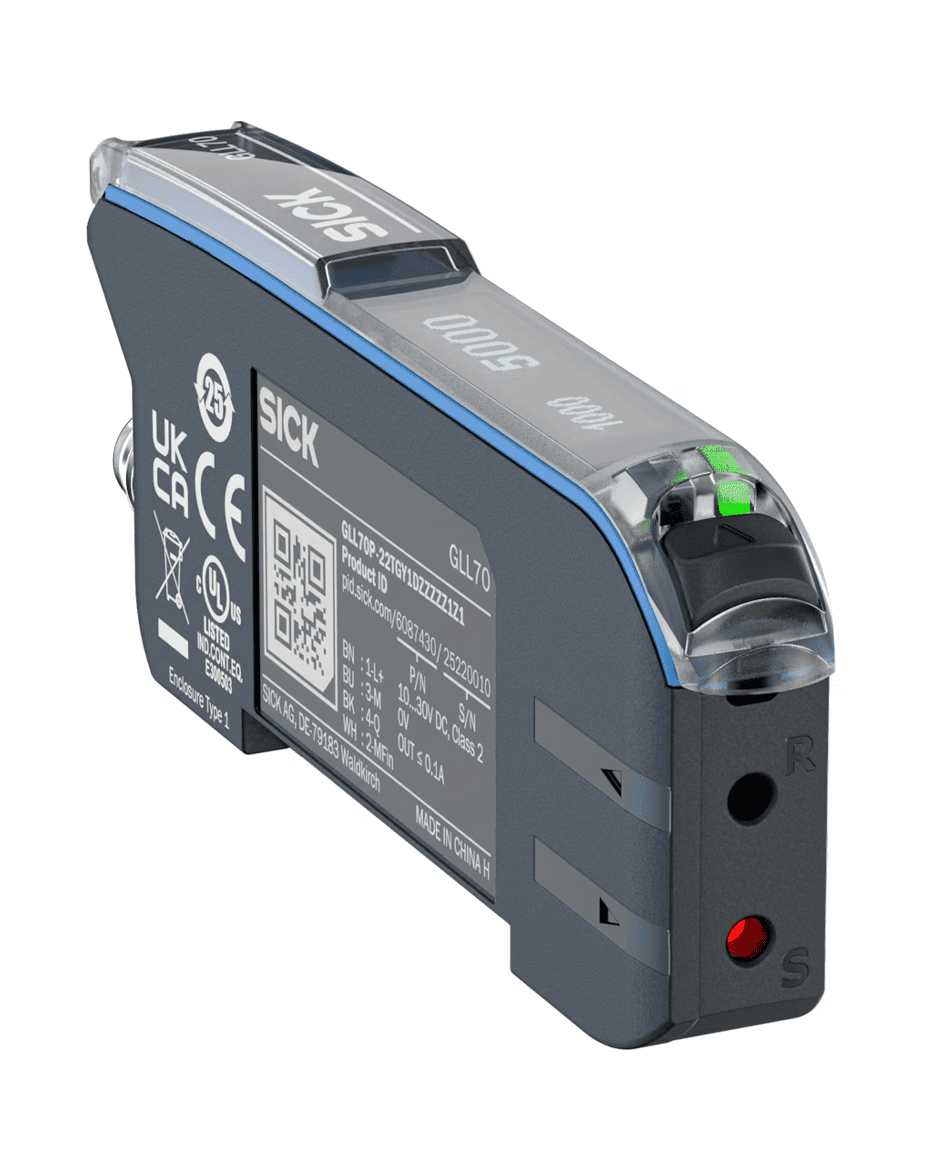
Fiber-optic sensor GLL70 - SICK
The fiber-optic sensors GLL70 amplifiers from SICK are suitable for the flexible integration of fiber-optic cables in confined spaces. The intuitive OLED display supports four languages and provides a flexible and user-friendly means of parameterization. The high transmitting power and the continuous threshold adaptation ensure a long-term reliable detection with minimal maintenance requirements.
With its response time of 50 µs, the GLL70 from SICK offers a high detection range (depending on fiber-optic cable) and a diverse portfolio of high-precision and adaptable fiber-optic cables.
By combining NPN and PNP digital outputs in a single device, it reduces the number of variants needed and cuts storage costs.
With its response time of 50 µs, the GLL70 from SICK offers a high detection range (depending on fiber-optic cable) and a diverse portfolio of high-precision and adaptable fiber-optic cables.
By combining NPN and PNP digital outputs in a single device, it reduces the number of variants needed and cuts storage costs.
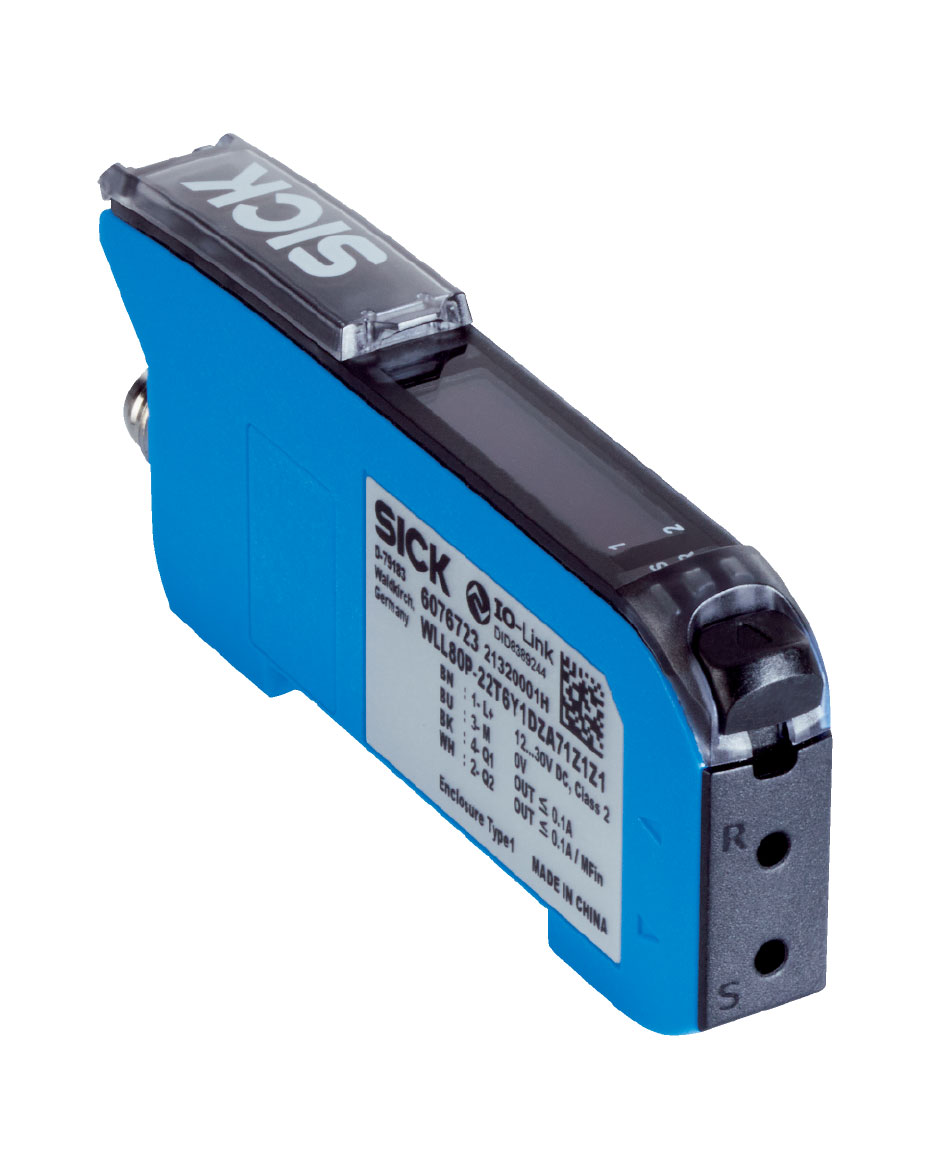
Fiber-optic sensors and fibers WLL80 - SICK
The smart solution for challenging detection tasks.
With the WLL80 opto-electronic fiber optic amplifier, SICK is creating a new generation of amplifiers for the flexible integration of fiber optics in confined spaces.
The intelligent WLL80 from SICK features IO-Link and can make processes even more efficient with various Smart Tasks. Thanks to IP54, it is protected from dust and spray water during operation. Continuous threshold adaptation ensures good performance in the long term with minimal maintenance requirements. In addition to a fast response time and high detection range, it is characterized by flexible and user-friendly parameterization via the OLED display or IO-Link. Whether as a single or bus version, the WLL80 is suitable for a wide range of applications thanks to its extensive fiber optics portfolio.
With the WLL80 opto-electronic fiber optic amplifier, SICK is creating a new generation of amplifiers for the flexible integration of fiber optics in confined spaces.
The intelligent WLL80 from SICK features IO-Link and can make processes even more efficient with various Smart Tasks. Thanks to IP54, it is protected from dust and spray water during operation. Continuous threshold adaptation ensures good performance in the long term with minimal maintenance requirements. In addition to a fast response time and high detection range, it is characterized by flexible and user-friendly parameterization via the OLED display or IO-Link. Whether as a single or bus version, the WLL80 is suitable for a wide range of applications thanks to its extensive fiber optics portfolio.

Fork sensor UFW - SICK
The UFW fork sensor from SICK makes non-contact web edge guiding possible. Thanks to ultrasonic technology, the UFW detects various materials with great precision and is therefore ideally suited for applications with transparent films or light-sensitive materials. The compact housing designs (30 mm and 60 mm fork width) allow space-saving installation. Calibration is simple to perform using a teach-in button. Three LEDs indicate immediately the position of the web material within the fork. Furthermore, the IO-Link communication interface opens numerous possibilities for fine adjustment, analyses, and monitoring.

Fork sensor WFE – SICK
The WFE is a rugged fork sensor from SICK that is simple and easy to mount. Thanks to its reliability and accurate detection, it is suitable for a large number of applications. The WFE can precisely detect objects up to a size of 0.5 mm with a high switching frequency of 5 kHz. The sensitivity adjustment, a push-pull output, and the ability to select between light and dark switching make it flexible and convenient to use. The WFE is enclosed in a rugged hybrid housing (IP67) made from ABS plastic with a carbon steel frame and performs reliably even in harsh environments. Five different fork widths and several different types of connectors are available. The WFE is therefore well and truly an all-in-one fork sensor solution.

Fork sensors WF, UF, WFM e WFS - SICK
Simplicity, flexibility, and precision – combined in a single fork sensor.
SICK fork sensors combine senders and receivers in a single housing, meaning that they can be adjusted quickly.
Thanks to the precise, focused light beam and the high detection accuracy, the sensors from SICK also detect very minor light attenuation differences. Many different fork sizes, straightforward mounting, and exceptionally high ambient light immunity are just some of the advantages of these fork sensors.
SICK fork sensors combine senders and receivers in a single housing, meaning that they can be adjusted quickly.
Thanks to the precise, focused light beam and the high detection accuracy, the sensors from SICK also detect very minor light attenuation differences. Many different fork sizes, straightforward mounting, and exceptionally high ambient light immunity are just some of the advantages of these fork sensors.

FTMg flow sensors with energy measurement - SICK
The FTMg energy consumption flow meter measures gas flow and temperature, as well as process pressure and energy consumption, with only one sensor – making it a cost-saving multi-talent.
With high measurement dynamics and reduced pressure loss, it measures non-corrosive gases – such as argon, helium, carbon dioxide and nitrogen – and compressed air with extreme efficiency.
With high measurement dynamics and reduced pressure loss, it measures non-corrosive gases – such as argon, helium, carbon dioxide and nitrogen – and compressed air with extreme efficiency.

High-performance fiber-optic sensor WLL180T - SICK
High-performance fiber-optic sensor with world’s fastest response time!
The WLL180T fiber-optic photoelectric sensor family, from SICK, provides the world’s fastest response time - only 16μs.
In addition, it offers superior sensing distances of up to 20m and its high light intensity delivers a reliable, high-powered solution – even in difficult ambient conditions, like dust, spray, mist, and water jets. Commissioning is simple – either via the external teach-in input or directly on the unit. Two, four-digit displays provide visualization of all programming steps, status displays, plus target and actual values through an intuitive menu structure. The WLL180T sensors can be operated either as a stand-alone or in a bus configuration, depending on the requirements. In a bus configuration, several sensors are networked via an internal bus, enabling the settings on one WLL180T to be copied to all other devices on the bus. Fiber-optic amplifier cross-talk is prevented by the sensors integrated anti-interference logic.
The WLL180T fiber-optic photoelectric sensor family, from SICK, provides the world’s fastest response time - only 16μs.
In addition, it offers superior sensing distances of up to 20m and its high light intensity delivers a reliable, high-powered solution – even in difficult ambient conditions, like dust, spray, mist, and water jets. Commissioning is simple – either via the external teach-in input or directly on the unit. Two, four-digit displays provide visualization of all programming steps, status displays, plus target and actual values through an intuitive menu structure. The WLL180T sensors can be operated either as a stand-alone or in a bus configuration, depending on the requirements. In a bus configuration, several sensors are networked via an internal bus, enabling the settings on one WLL180T to be copied to all other devices on the bus. Fiber-optic amplifier cross-talk is prevented by the sensors integrated anti-interference logic.

High-performance photoelectric sensors W34 - SICK
The W34 photoelectric sensor family from SICK features a durable plastic housing in ABS. All configuration components for the sensor are protected by a durable cover, allowing these sensors to be used in outdoor areas. The housing in die-cast zinc (W24-2) is recommended especially for tough and extreme ambient conditions.

Hydrostatic level sensor - LFH – SICK
The level probe LFH, from SICK, is a robust pressure transmitter for continuous level measurement.
The liquid column above the probe creates a hydrostatic pressure which is a direct indicator for the liquid level. Through its permanently connected
cable the LFH is submerged into the liquid to be monitored. Thus, the container wall does not need to be disturbed to fit a level sensor.
The liquid column above the probe creates a hydrostatic pressure which is a direct indicator for the liquid level. Through its permanently connected
cable the LFH is submerged into the liquid to be monitored. Thus, the container wall does not need to be disturbed to fit a level sensor.

Inductive Proximity Sensor IMB – SICK
The rugged standard for use in harsh ambient conditions!
The inductive IMB proximity sensor from SICK is a byword for reliability in harsh working conditions, whether it is in contact with cooling lubricants or being used outdoors. With its extended sensing ranges, made highly precise thanks to the use of SICK ASIC technology, the IMB ensures reliable, stable processes.
The inductive IMB proximity sensor from SICK is a byword for reliability in harsh working conditions, whether it is in contact with cooling lubricants or being used outdoors. With its extended sensing ranges, made highly precise thanks to the use of SICK ASIC technology, the IMB ensures reliable, stable processes.
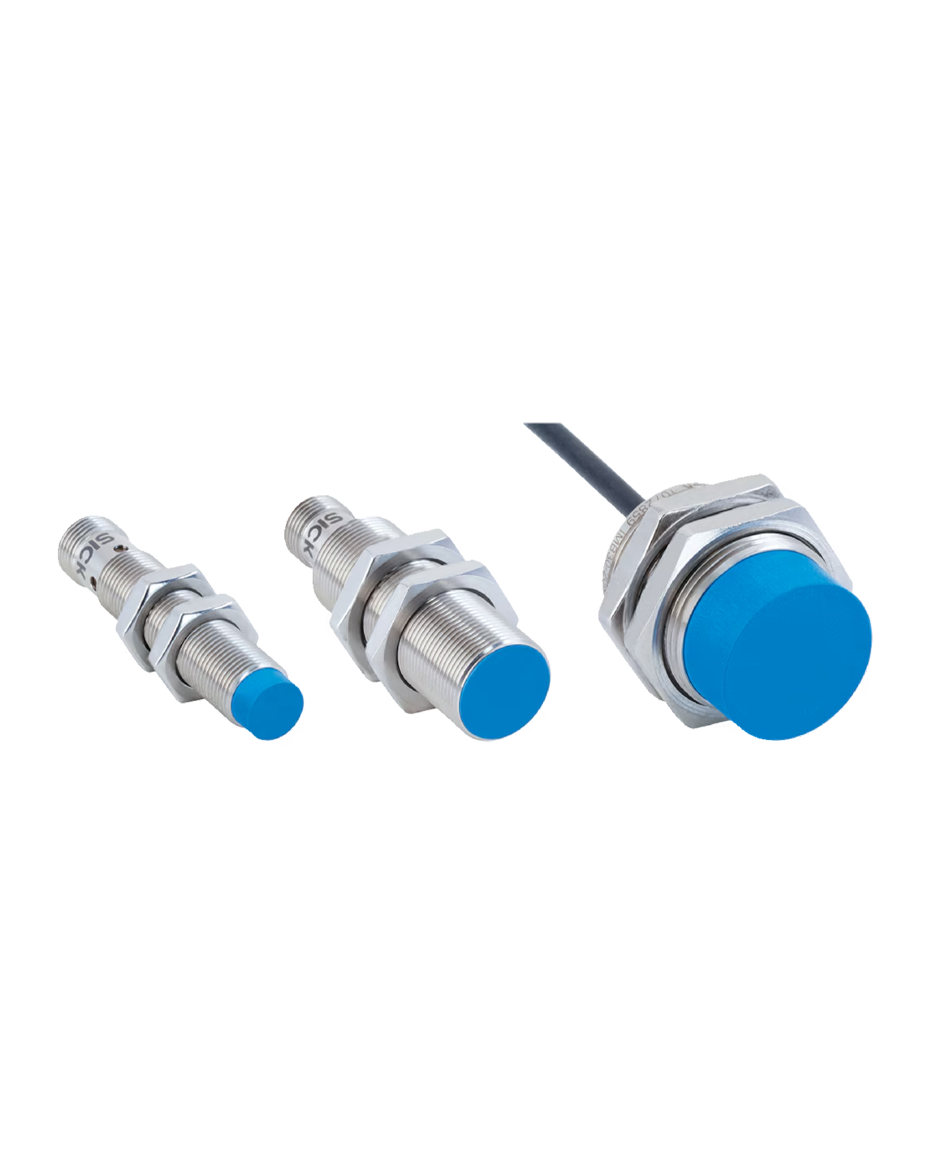
Inductive proximity sensor IMG – SICK
The IMG inductive proximity sensor from SICK precisely detects metallic objects even in harsh environments. In price-sensitive mobile applications and automation solutions, it is suitable as a switch for end position detection or speed measurement. Using the IMG, fault-free processes can be ensured even with high temperature fluctuations.
The fully-encapsulated sensor is impervious to mechanical shocks as well as vibrations, and with its IP69K rating, is protected against water as well as oils, coolants, and all kinds of contamination. This makes the IMG an economical solution for challenging outdoor uses and machine construction. Thanks to the plug-and-play, the sensor can also be commissioned quickly.
The fully-encapsulated sensor is impervious to mechanical shocks as well as vibrations, and with its IP69K rating, is protected against water as well as oils, coolants, and all kinds of contamination. This makes the IMG an economical solution for challenging outdoor uses and machine construction. Thanks to the plug-and-play, the sensor can also be commissioned quickly.
Drives
Analytics
Cabling
Pluggable electrical connections
Control
Detection
Gas detection
Energy
Electrical tools
Building management systems
Automatic identification
Lighting and control
Network inspection
Human-machine interface
IoT
Measurement
Process
Electrical cabinets
Industrial networks
Robotics
Machine safety
Temperature
Test, measurement and calibration
Machine vision




Sale general conditions Garantias, reparações e devoluçõesPolítica de CookiesPrivacy PolicyReporting channel
F.Fonseca © All rights reserved.
- 0
- 1